
In Italy, they use Type F and L power plugs and outlets. The voltage is 230V, and the frequency is 50Hz.
⚠️ So, you’ll need a travel adapter in Italy. Their plugs and outlets are different from the Type A and B ones we use back in the States.
Quick Overview of the Plugs in Italy:
- Plug type in Italy: F and L
- Standard voltage: 230V
- Frequency: 50Hz
- Need a travel adapter? Yes, you do need a travel adapter
- Need a voltage converter? Probably needed for some devices
- Recommended plug adapter: One Beat International Power Adapter
The information you see here is carefully compiled from official power authority guidelines, global IEC standards, and real traveler feedback from around the world.
Power Outlets in Italy
In Italy, they use Type F and L power plugs and outlets.
Type F

Type F outlets have two round prongs and grounding clips on the sides. Type C and E plugs will also fit.
Type L

Type L outlets have three round prongs in a straight line and support different power ratings. Some Type C plugs may also fit.
The Only Travel Adapter You’ll Need in Italy
The wrong adapter can mean slow charging, device damage, or no power at all. We don’t sell travel adapters, but we’ve found the best one for Italy by looking at voltage, safety, and compatibility. Here’s our top pick:
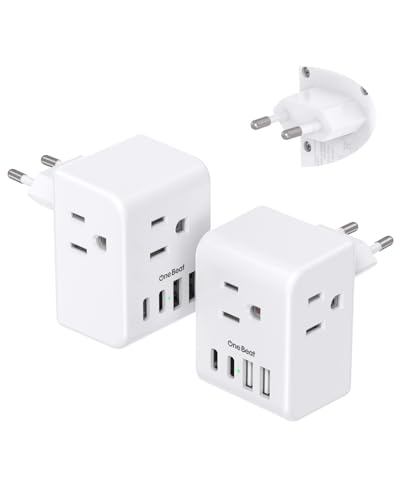
No power adapter and already out there? You’ll likely find something locally, so it’s not the end of the world. But when you’ve packed your own, you can skip the hassle and settle in without missing a beat.
People visiting Italy frequently also travel to Switzerland, Austria, and France. It’s a good idea to check if your plug fits in all of them.
Do You Need a Voltage Converter?
Before plugging in your electronics in Italy, check the voltage. It’s different from the 120V used in the U.S., so you’ll likely need a converter.
Before plugging in your electronics abroad, always double-check the voltage label. If it says “100-240V, 50/60 Hz”, your device will work on both 120V and 220-240V power sources without a converter. This is common for tablets, laptops, cameras, and rechargeable toothbrushes.

Which Travel Devices May Need a Converter?
Not sure which voltage converter to get? Take a look at the best-rated ones right here.
| Device | Need Converter? | Notes |
|---|---|---|
| Phone | ❌ No (usually) | Most modern phone chargers are dual voltage (100–240V) |
| Laptop | ❌ No (usually) | Check the power brick label for 100–240V |
| Hairdryer | ✅ Yes (often) | High wattage; many models are not dual voltage |
| Electric toothbrush | ⚠️ Check voltage | Some models are 110V only |
| Camera / DSLR | ❌ No (usually) | Most chargers are dual voltage |
| Power bank | ❌ No | Charges via USB, adapter is enough |
| Electric shaver / trimmer | ⚠️ Check voltage | Older or cheaper models may not support 230V |
| Tablet / iPad | ❌ No | All models are dual voltage |
| Portable fan | ✅ Yes (sometimes) | Many models are not compatible with 230V |
| Game console | ⚠️ Check voltage | Newer consoles like PS5 and Xbox are often dual voltage — check to be sure |
| Bluetooth speaker | ❌ No (usually) | Charges via USB |
| E-reader (Kindle, etc.) | ❌ No | USB charging only, no converter needed |
Top Travel Essentials to Pack
There’s more to smart packing than clothes and chargers. These tools make travel smoother and more stress-free.


Power Bank
No products found.
More About Italy
Italy welcomed over 57 million international visitors in 2023 and hit a new record in 2024 with 65 million. It now holds the title of the country with the most UNESCO World Heritage Sites in the world, topping 60. From Roman roads to Renaissance cities, coastal cliffs to active volcanoes, it’s a destination for every kind of traveler.
Food, art, history, and flavors turn every region into a story. You can taste genuine pasta and Parmesan in Bologna, marvel at sculptures in Florence, shop lanes in Milan, enjoy raw energy in Naples, or float down canals in Venice. Despite tourism boosting local economies, small towns still keep their soul—markets stay local, traditions stay alive, and hidden treasures await off the beaten path.
Whether you’re chasing architecture, surfing beaches, hiking volcanoes, or just looking to get lost in medieval lanes, Italy covers it all. English is increasingly common, travel logistics are smoother than ever, and the overall vibe? Rich and real. For American travelers who want style, history, and some inevitable indulgence (wine, gelato, you name it), Italy still remains the ultimate mosaic of experiences.
Top places to visit in Italy: Rome, Florence, Venice, Milan, Naples, Verona, Bologna, and Siena.