
In Hungary, they use Type C and F power plugs and outlets. The voltage is 230V, and the frequency is 50Hz.
⚠️ So, you’ll need a travel adapter in Hungary. Their plugs and outlets are different from the Type A and B ones we use back in the States.
Quick Overview of the Plugs in Hungary:
- Plug type in Hungary: C and F
- Standard voltage: 230V
- Frequency: 50Hz
- Need a travel adapter? Yes, you do need a travel adapter
- Need a voltage converter? Only necessary for specific appliances
- Recommended plug adapter: One Beat International Power Adapter
We use official electrical regulations, global IEC standards, and real feedback from travelers to provide up-to-date and reliable information.
Power Outlets in Hungary
In Hungary, they use Type C and F power plugs and outlets.
Type C

Type C outlets have two round prongs and no grounding pin. Type E and F plugs usually fit too, but grounded plugs will need an adapter.
Type F

Type F outlets have two round prongs and grounding clips on the sides. Type C and E plugs will also fit.
The Only Travel Adapter You’ll Need in Hungary
A cheap, unreliable travel adapter can overheat, fry your devices, or stop working mid-trip—and no one wants that. We don’t sell them, but we’ve done serious research to find the safest and most reliable option for Hungary. Tested for compatibility, durability, and charging speed, this one won’t let you down:
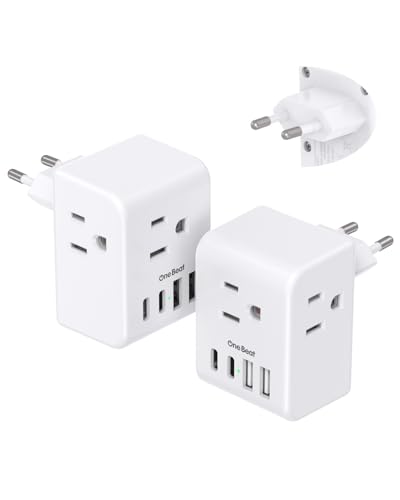

If you’ve already left and forgot your power adapter, don’t worry. Airports and shops in most countries carry basic adapters. That said, it’s always easier to bring a reliable one from home so you’re not stuck buying whatever happens to be available.
Travelers heading to Hungary often combine their trip with nearby countries like Romania, Austria, and Slovakia. Always check outlet compatibility before traveling.
Do You Need a Voltage Converter?
Before plugging in your electronics in Hungary, check the voltage. It’s different from the 120V used in the U.S., so you’ll likely need a converter.
Before heading abroad, always check the power input label on your device. If it reads “100-240V, 50/60 Hz”, it’s designed to run on both 120V and 220-240V without needing a converter. Many smartphones, laptops, and cameras have this capability.

Which Travel Devices May Need a Converter?
Want peace of mind while traveling? These top-rated voltage converters are a safe bet.
| Device | Need Converter? | Notes |
|---|---|---|
| Phone | ❌ No (usually) | Most modern phone chargers are dual voltage (100–240V) |
| Laptop | ❌ No (usually) | Check the power brick label for 100–240V |
| Hairdryer | ✅ Yes (often) | High wattage; many models are not dual voltage |
| Electric toothbrush | ⚠️ Check voltage | Some models are 110V only |
| Camera / DSLR | ❌ No (usually) | Most chargers are dual voltage |
| Power bank | ❌ No | Charges via USB, adapter is enough |
| Electric shaver / trimmer | ⚠️ Check voltage | Older or cheaper models may not support 230V |
| Tablet / iPad | ❌ No | All models are dual voltage |
| Portable fan | ✅ Yes (sometimes) | Many models are not compatible with 230V |
| Game console | ⚠️ Check voltage | Newer consoles like PS5 and Xbox are often dual voltage — check to be sure |
| Bluetooth speaker | ❌ No (usually) | Charges via USB |
| E-reader (Kindle, etc.) | ❌ No | USB charging only, no converter needed |